- Single Still: The Window, Makkah, 2024

The Window, Makkah, 2024 Cheers.
- Single Still: Dubai Eye, January 2024

The Dubai Eye, January 2024. Cheers.
- Single Still: Evening on the Corniche, Red Sea, 2024
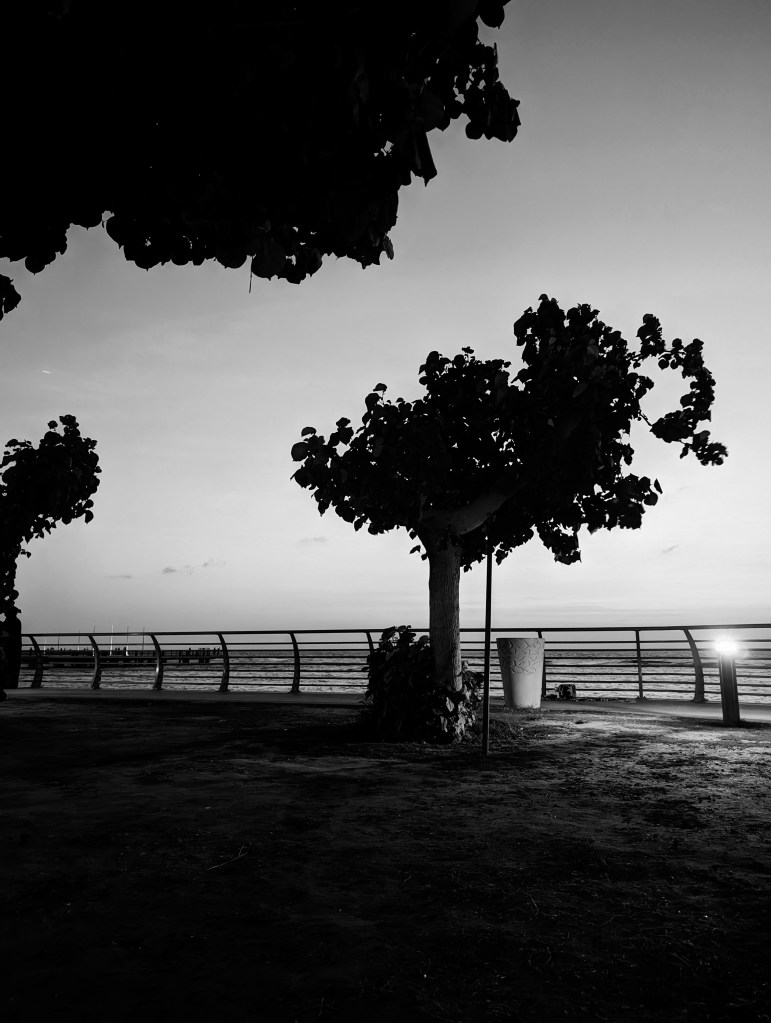
Evening on the Corniche, Red Sea, 2024. Cheers.
- A Briefing: The Makkah Royal Clock Tower
One of the notable features of the Makkah cityscape (if not the most notable) is The Makkah Royal Clock Tower. It’s part of a tower complex megastructure called The Clock Towers (technically called Abraj al Sa’a, meaning Towers of the Clock, but more commonly called Abraj al Bait meaning Towers of the House).
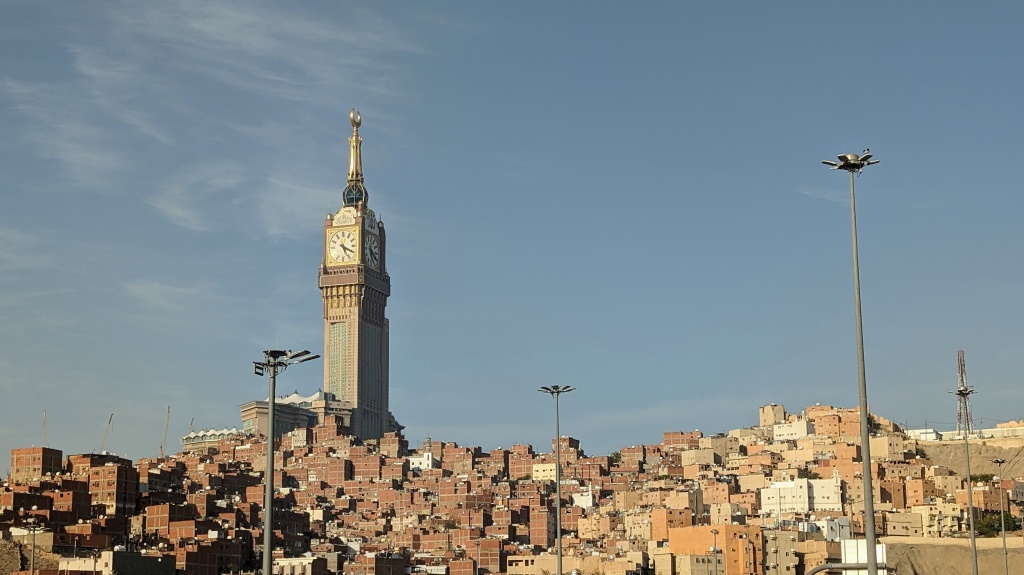
The Makkah Royal Clock Tower as seen from the Second Ring Road in Makkah. Taken with Google Pixel 8. The complex is comprised of the main central tower, The Makkah Royal Clock Tower, which has 102 floors, and 6 surrounding buildings: four 55+ floor tall towers, and two 46 floor tall towers. Construction started in 2002 was all finished in 2012. Some side facts for those who care about such things: The Makkah Royal Clock Tower is the tallest clock tower in the world, and it has the largest clock face of any clock in the world.
It’s a little difficult to grasp the scale of the structure in person, especially since there are hills throughout the city obfuscating the view of the building in totality, but for a sense of its scale, the green jewel above the clock is 8 stories tall and contains a science center and observation deck.
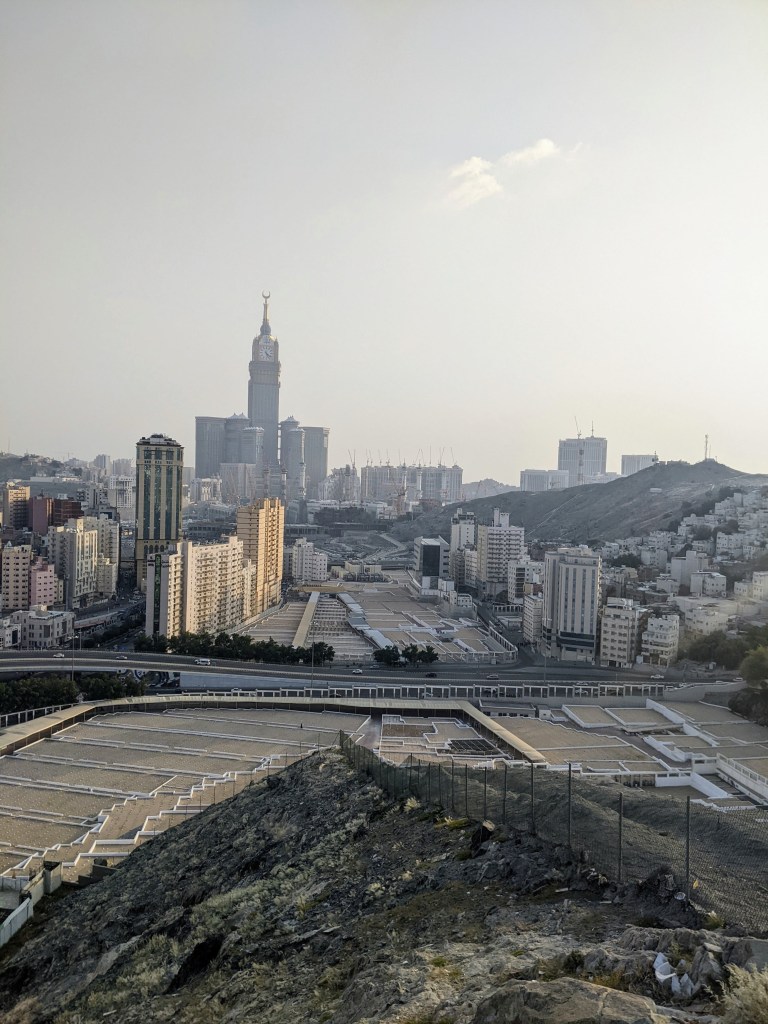
Viewing the Clock Tower from the North. Note the flat areas in the foreground – these are cemeteries in Makkah. Taken with Google Pixel 8. The clocktower can be seen from virtually everywhere inside the city and from a couple miles outside of the city. This is due to the layout of Makkah: the Masjid al Haram with the Kaaba is in the very center of the city, and the Clock Tower is a only few hundred yards away from it. Moving outward from the city center are highway-rings – four of them, with the First Ring Road circling just around the Masjid al Haram, and the furthest Fourth Ring Road circling the city proper. Many of the streets in the neighborhoods of Makkah point directly to the city center, so a view of the clock tower can almost always be seen.

The Clock Tower as seen from the Dhiyafah neighborhood. Many of the streets in Makkah have the clocktower in the background. Taken with Google Pixel 8.
The Clock Tower itself is a bit polarizing in terms of design. While I personally don’t have strong opinions on architecture (the German designers of the Clock Tower can breathe a sigh of relief) nor do I really care to opine on the question of what-is-opulence, I do find the Clock Tower to be an interesting sight in the evenings due to the way the it reflects sunlight in a gold hue and how breaks up the otherwise rocky horizon. When it lights up at night, it is a bold sight to be in the background of scenes when driving around the city. Also, to me and probably to other fans of Lord of the Rings, it bears a resemblance to Barad-dûr. My own building tastes would have likely resulted in a building that looked more minimal (or boring) to everyday folk.

The Clock Tower stands approximately 60 stories higher than the surrounding buildings and lights up green at night. Taken with Google Pixel 8.

The Clock Tower from the west side of the city. just outside of Third Ring Road. When driving from Jeddah, it can be seen appearing above the horizon a few miles away outside of Makkah. Taken with Canon M50 II. Cheers.
- Single Still: Makkah Skyline from the West, 2024

Makkah Skyline from the West, 2024. Cheers.
- Single Still: Makkah Clocktower from Al Sarraa Street, 2024

Makkah Clocktower from Al Sarraa Street, 2024. Cheers.
- A Briefing: Trip to Thuwal Beach from Makkah
We made a quick trip up to Thuwal on Cinco de Mayo to catch the sunset from the beach. Thuwal is a coastal town approximately an hour north of Jeddah situated on the Red Sea.
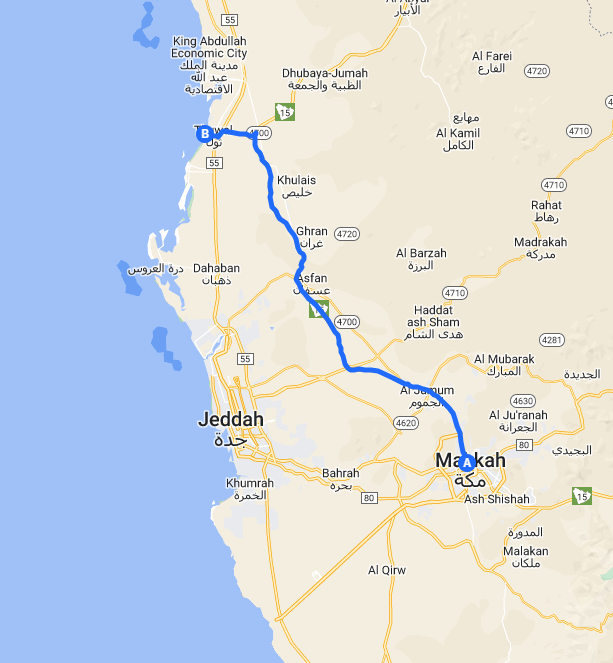
Our route from Makkah to Thuwal on Highway 15.
The route from Makkah to Thuwal is primarily north on Highway 15, which is the main highway from Medina to Makkah. The drive is easy – not too busy, the highway is wide, speed cameras make sure no one is going too fast, and the other traffic is primarily semi-trucks and large buses carrying Umrah folk between Makkah and Medina. A fact I hadn’t realized until writing this is that Highway 15 runs the length of Saudi Arabia, from the Jordanian border in the North to the Yemeni border in the South – a distance by car of 1533 miles (approx. 28 hours) which is a little shorter than the distance from Columbus, Ohio to Las Vegas.
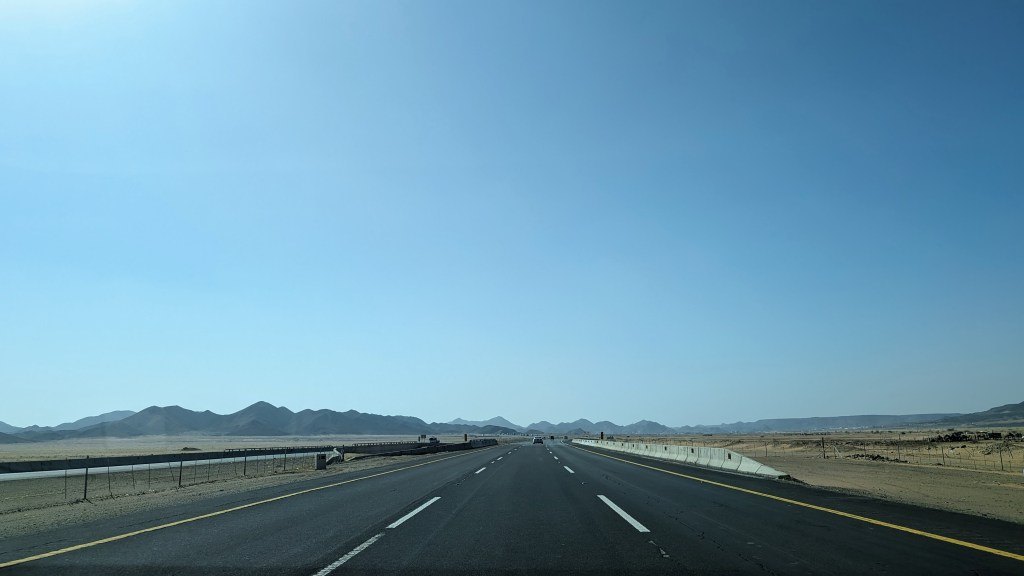
The roads are reminiscent to the Southwest US, apart from the little grey camera boxes (see left side of road), which flash a bright flash of light when speedsters pass by. The speedsters then receive a ticket via text message to pay a fine. Taken with Google Pixel 8. 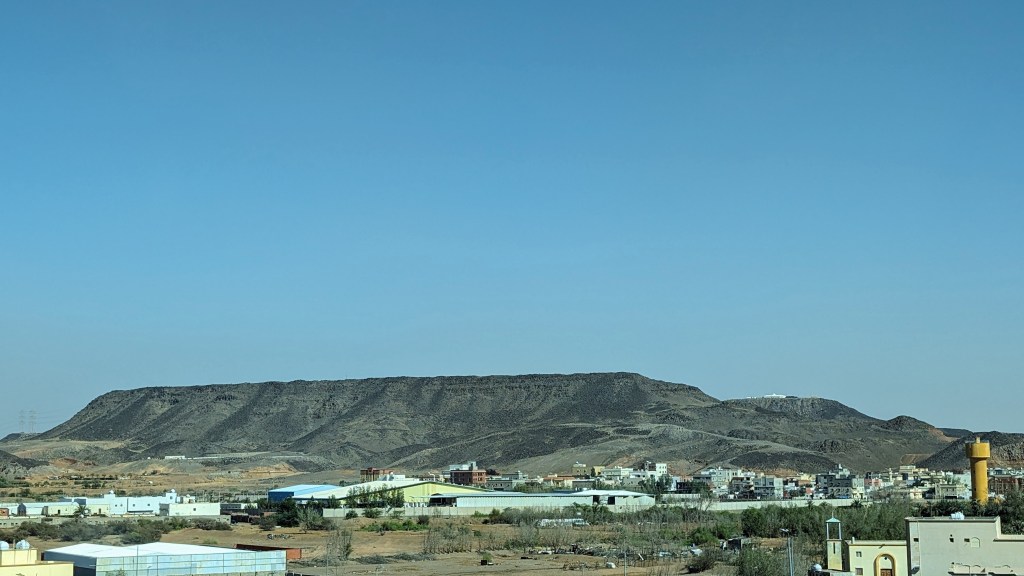
The landscape is fairly rugged – many of the hills are covered in black volcanic pumice. Taken with Google Pixel 8. The beach at Thuwal, at least on a Sunday evening, is calm and low-key. Families relax, kids take a dip in the water, and everyone participates in the ubiquitous and universal watching of the sun set. Life guards were on duty, and the beach is fairly clean. An aside: bathrooms leave much to be desired, and despite having cool architecture, it’s best to go ahead of time, or hold out for a masjid bathroom or a fast-food joint’s bathroom.
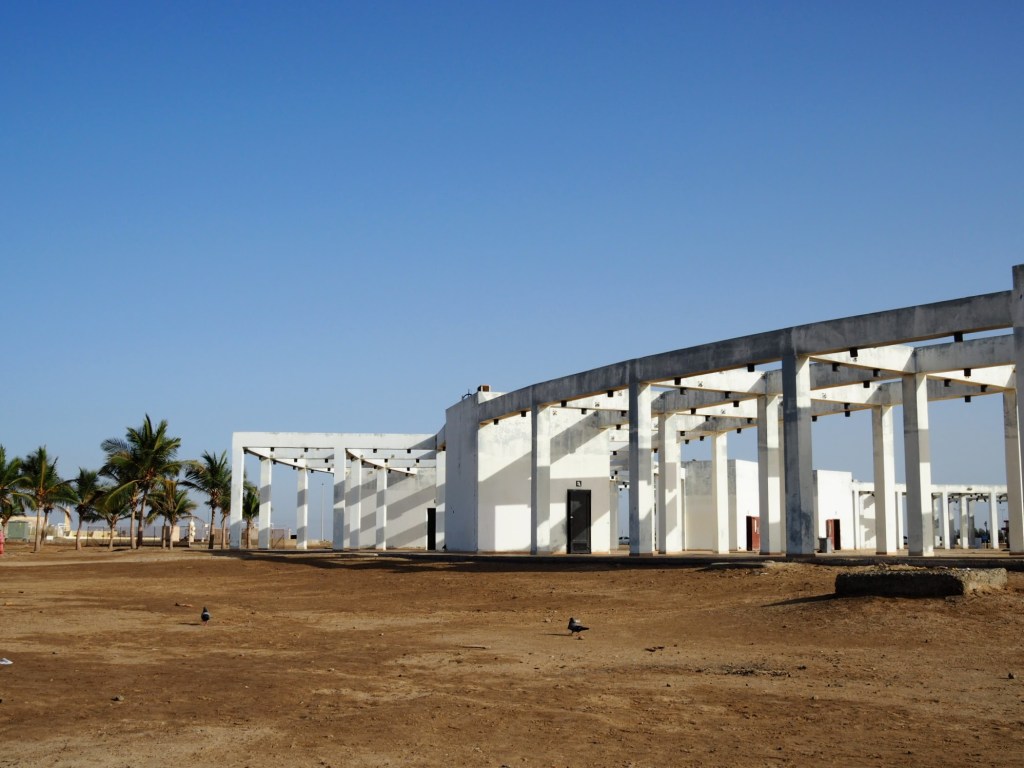
Thuwal Beach Bathrooms, 2024. 
The Setting Sun with Seagulls, Thuwal Beach, 2024. A wave-break is in the distance to lower the wake. 
The Setting Sun, Thuwal Beach, 2024. Unless otherwise noted, these photos were taken with my Olympus OMD EM10 with a Sigma 19mm (38mm eq.) f2.8 lens.
Cheers.
- Snapshots: Star Wars Day Sunset at the Edge of Makkah
On any given evening while looking west from Al-Zaidy District on the western edge of Makkah, the sun can be seen setting over the rocky hills in the distance. I managed to grab a couple photos this evening in an attempt to channel a bit of Tatooine not realizing that it was Star Wars Day.
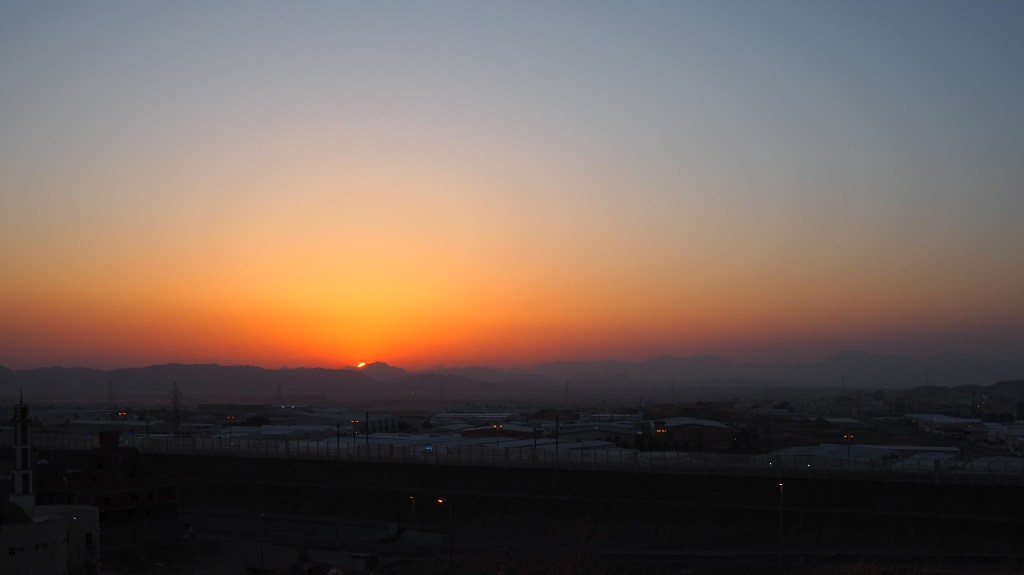
The sun was poking out just beyond the distant hills to the west. 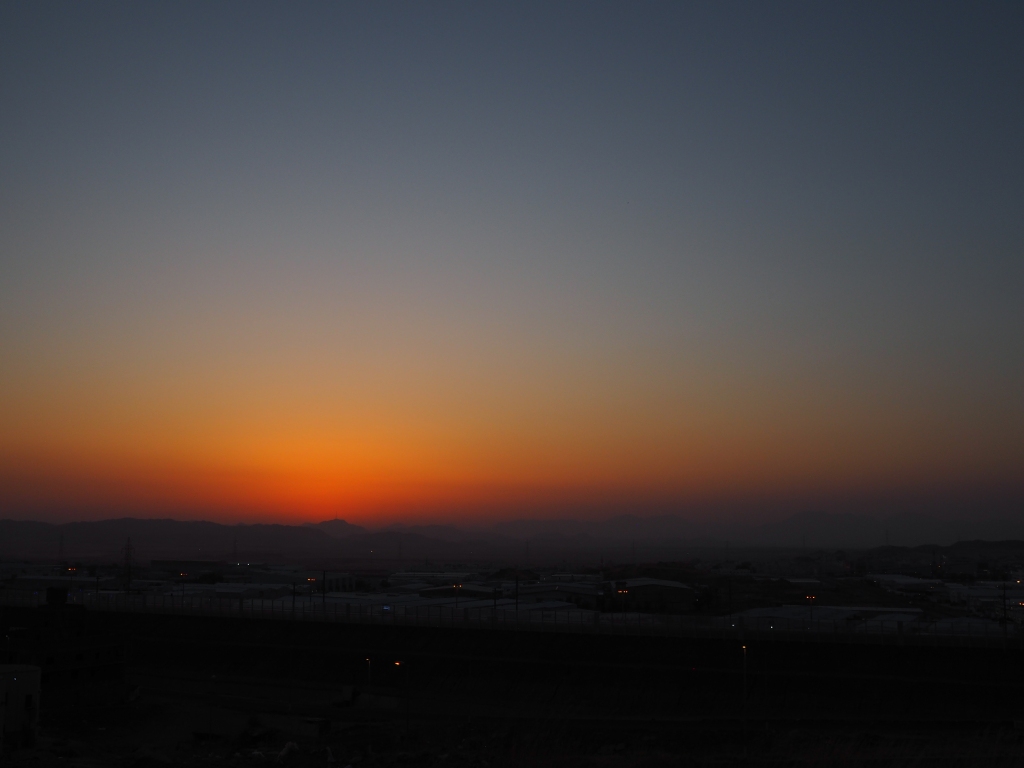
A greenish hue can be seen once the sun lowers just beyond the horizon.
May the 4th be with you, folks. These photos were taken with my Olympus OMD EM10 with a Sigma 19mm (38mm eq.) f2.8 lens.
Cheers!
- Snapshots: The Neighborhood Mosques of Al Hamra District
The average neighborhood in Makkah has quite a few masjids (mosques). In Al Hamra alone, there are approximately 14, with at least 2 under construction (that I have counted) – not counting prayer rooms often found at gas stations. They can take on a variety of different architectural styles, and are often named by the person who had the masjid built. Here are a few snapshots of the mosques in Al Hamra.

Masjid Miriam Bint Umran, Al Hamra, 2024. In English, this mosque is titled Mosque of Miriam Daughter of Umran. 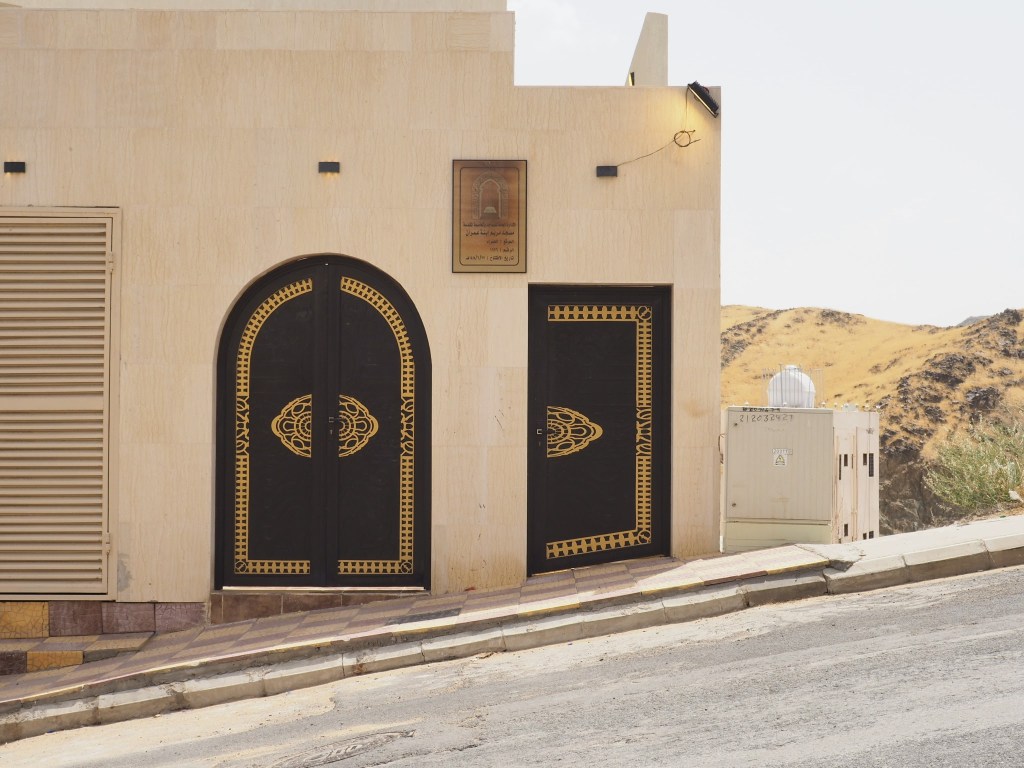
Masjid Miriam Bint Umran, Al Hamra, 2024. This mosque has a small plaque above the door stating it was built last year. 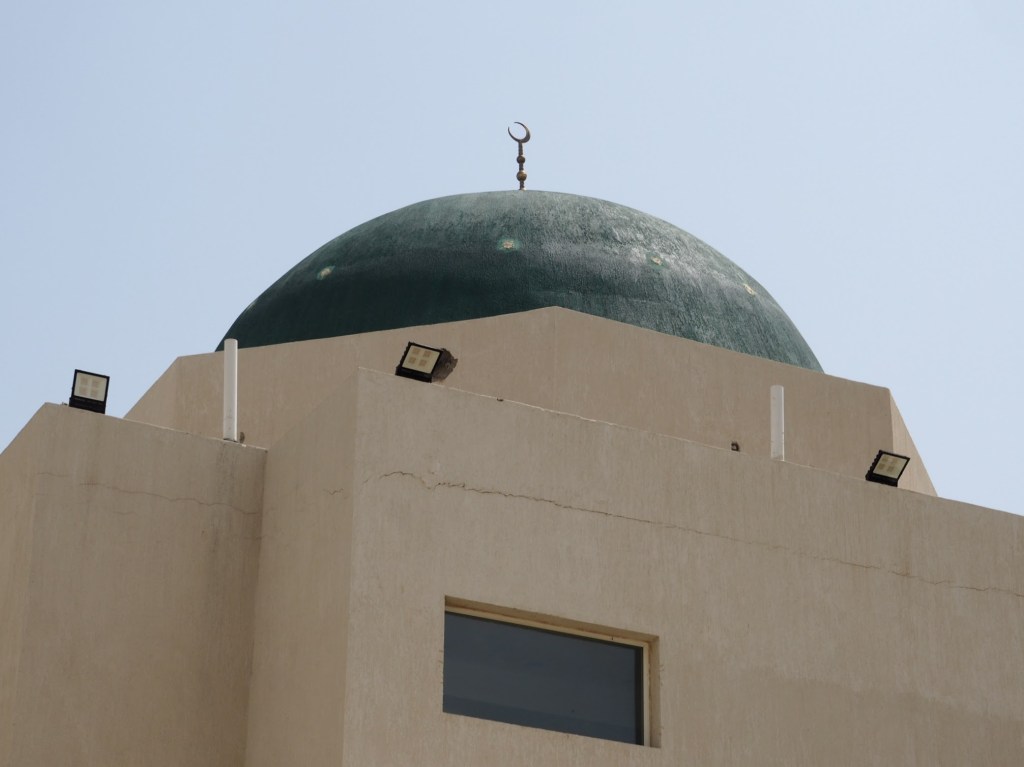
Masjid Miriam Bint Umran Dome Detail, 2024. 
Masjid Miriam Bint Umran, Minaret Detail, Al Hamra, 2024. 
Masjid Halwani, Al Hamra, 2024. These steel building mosques tend to pop-up for convenience, where it may be too far of a walk to go to a larger mosque. 
Unnamed Steel Mosque on a Hill, Al Hamra, 2024. 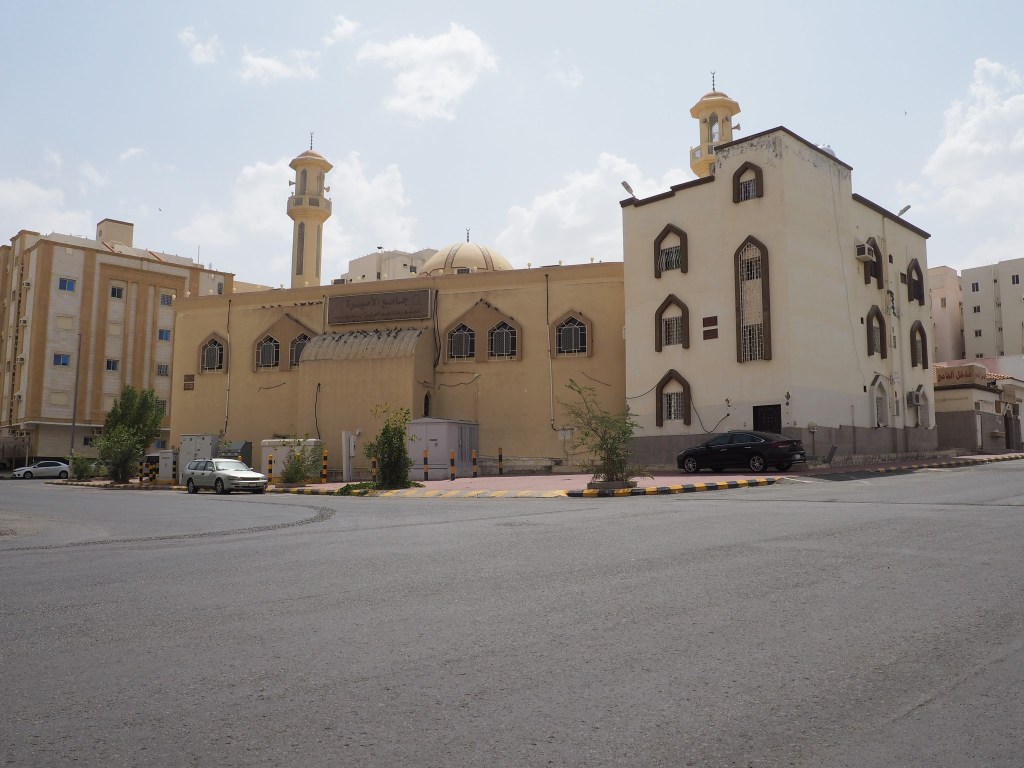
Masjid al-Amira, Al Hamra, 2024. This mosque is one of the notably larger mosques in Al-Hamra, with two minarets. 
Masjid al-Amira, Dome and Minaret Detail, Al Hamra, 2024. The sign titles the mosque as “Jammah Al-Amira”. Jammah generally means gathering place and is a common title of mosques. 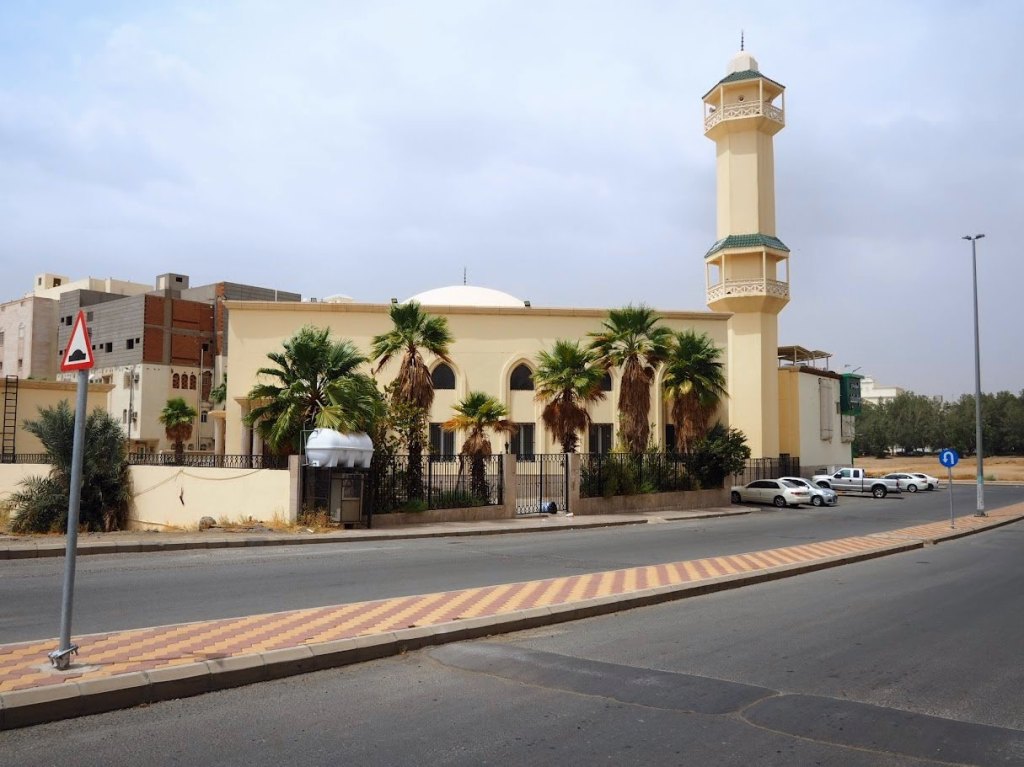
Al Hamra Mosque, Al Hamra, 2024. This is the de facto large mosque for the neighborhood, and is one of the older ones. The back of the mosque is attached to a grocery store. 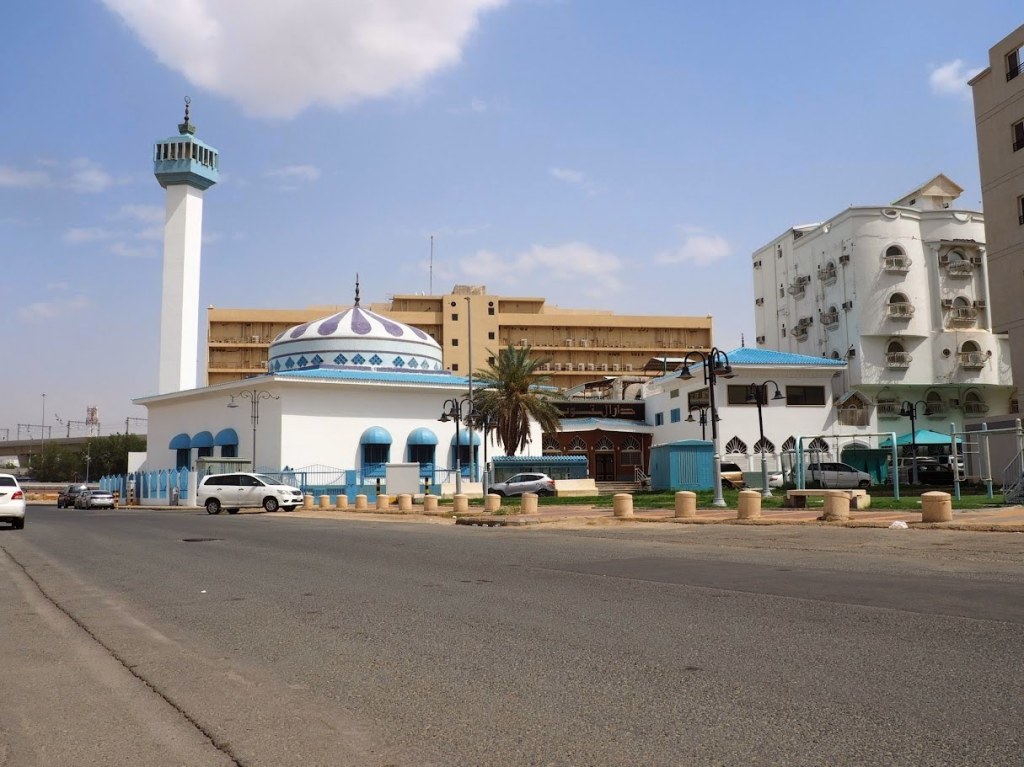
Masjid Dar al-Tawba, Al Hamra, 2024. This mosque is one of the more colorful ones in the neighborhood. 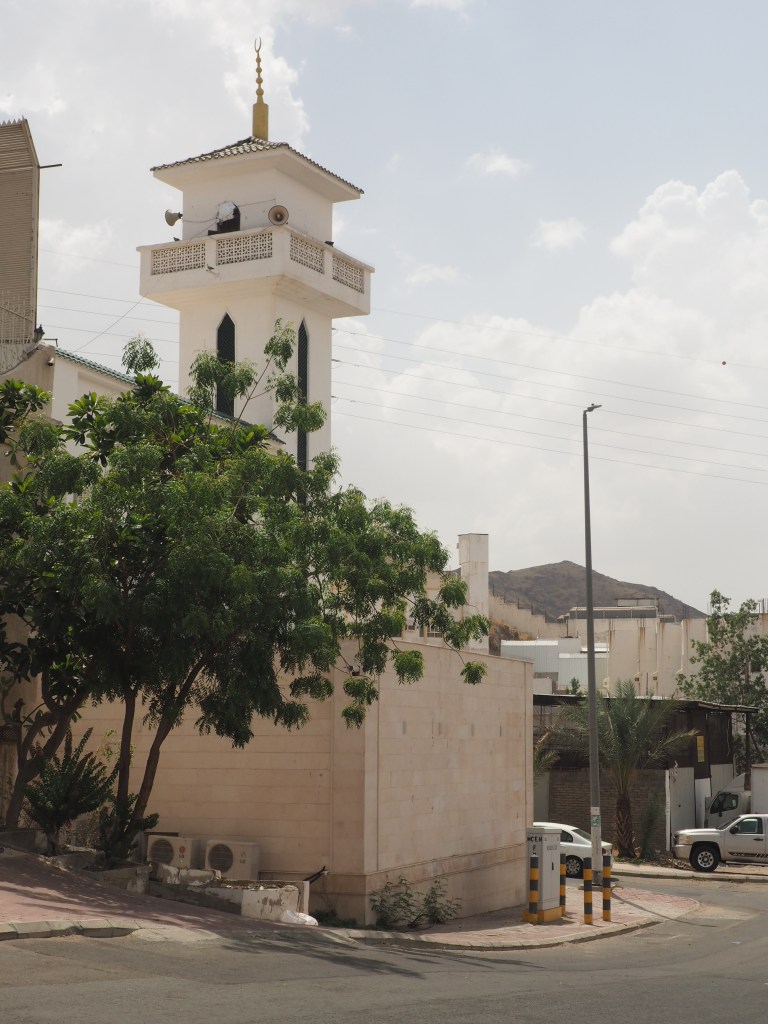
Masjid al-Jud, Al-Hamra, 2024. 
An unnamed, newly constructed steel building mosque, Al Hamra, 2024. 
Mosque on a round-a-bout, Al Hamra, 2024. 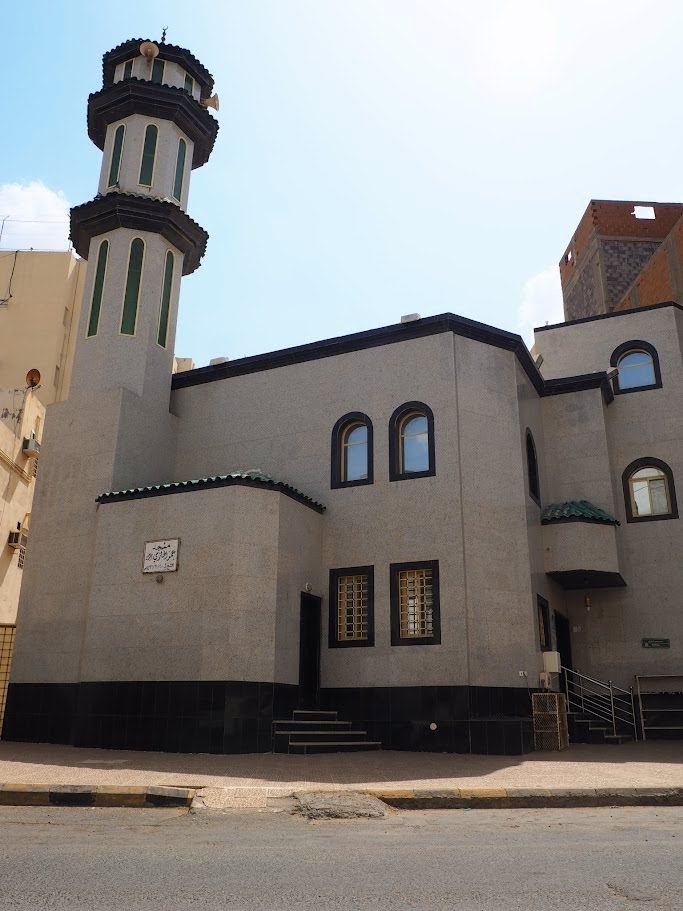
Masjid Umar Al-Hazmi, Al Hamra, 2024. This Masjid was particularly difficult to photograph due to being tucked in very narrow streets. All photos were taken with my Olympus OM-D E-M10 and kit 14-42mm lens.
Cheers.
- A Briefing: Camelspotting
There’s no straightforward answer to the question, Where is the best area in the Makkah region to spot camels? Unless you operate on camel-time (or happen to be a camel herder yourself), the question may even be impossible to answer.

Dromedaries eating grass in an undeveloped subdivision on the outskirts of Makkah. Taken with Google Pixel 8.
The dromedary (yes, I learned this term this very moment of writing) is a bit of an enigmatic animal to me – it exists in my mind somewhere on the intersection of having the odd proportions of a llama, the muscular disposition of a horse, and the grazing tendencies of cattle. It’s tall, historic, and representative of the entire geographic region of Arabia in the eyes of a foreigner. Its presence is difficult to ignore against the sterile desert. Also, as it goes without saying, the dromedary does not exist in Ohio outside of zoos so seeing camels grazing openly is perplexing to me.
I knew when coming to Saudi Arabia I would likely see at least one camel, after all if I ask what comes to your mind if I said the words desert and animal, I suspect the idea of camel wouldn’t be too far away. However, what I didn’t consider was their grazing tendencies along highways and roads, their sheer size, and their striking, difficult to define aloofness.

A camel stands on a sidewalk nibbling on surrounding grass. Taken with Google Pixel 8. I’d never given it much thought, but there are different types of camels, and in contrast to its double humped cousin the Bactrian camel of central Asia, the dromedary only has one hump and exists primarily in North Africa and Arabia.
According to the Wikipedia page on the single-humped camel, dromedaries have not occurred naturally in the wild for approximately 2,000 years. I cannot deny this claim, but my own eye-witness testimony does lean into dromedaries existing in the domesticate-only variant. On outskirts of Makkah, camels can be seen grazing in herds (flocks, trains, caravans, packs?) ranging in size from 15-50 camels – wandering around eating grasses grown from the scant amounts of rain from the rainy season, guided by a camel herder riding on a camel of his own.
I doubt I need to state this, but camels are big – they stand at around 6 ft to 8 ft tall at the shoulder and weigh approximately half a ton. Camels can be nearly black in color to nearly white. One additional note on the physical appearance of the dromedary: they move both legs on one side of their body at the same time when they walk and seem to glide keeping their heads level to their back.

A camel leans down to eat desert vegetation. Taken with Pixel 8. The camel’s deliberate slow-pokiness and indifference to the problems of yesterday and tomorrow remind me of looking out to any animal pasture and feeling time itself slow, the breeze which blows the grass becomes more apparent, and stresses subside.
The question I began with still doesn’t have a direct answer, but the best answer, in my opinion, is that just outside of Makkah where the city ends, with a bit of luck, a herd might be poking around.

Camels grazing. Taken with Google Pixel 8.
Cheers.
- Jeddah Corniche
According to Merriam & Webster, a corniche is a road built along a coast and especially along the face of a cliff. Apparently the English borrowed the word from the French term route à corniche, translating to road on a ledge, which was a step further away from the Italian word cornice, meaning ledge. From this definition, my own thinking leans into a winding, high, sea swept road on a ledge. In practice, it seems to me, a corniche is more of a waterfront promenade.
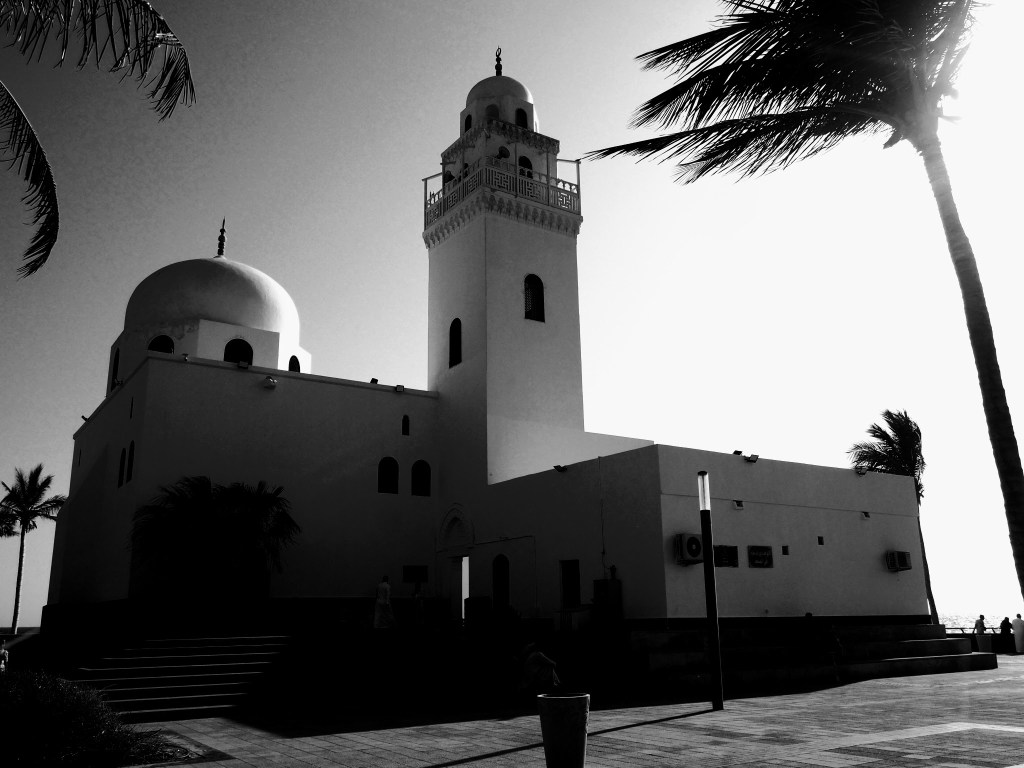
The Island Mosque is a mosque built in 1986 designed by Egyptian Architect Abdel-Wahed El-Wakil. Prior to the construction of the Jeddah Corniche area in 2017, The Island Mosque was built on a small rock island connected via narrow walkway. Now it is part of the concrete walkway portion of the corniche, connected to Dunkin’ Donuts approx. 50 yards away. Across the Red Sea, around 141 miles directly due East of Sudan, lays the Jeddah Corniche – a roughly 18 mile stretch of waterfront along the city that was developed mainly into a pedestrian walking area directly along the water with hotels and office buildings just inland. One of the most popular areas of the Jeddah Corniche is a 2 mile portion along the North-South running Al Kurnaysh Branch Road, which begins in the south near The Island Mosque and ends up near a new mall being developed in the North (not sure of the name). Along this portion is a walking pathway lined with benches, palm trees, art installations, fountains, and different fare ranging from the commercial McDonald’s, Al Baik, and Dunkin’ Donuts, to the more local Corn in a Cup.

Corn in a Cup sells various snacks, but the obvious go-to is corn in a cup, which is a small cup of hot, buttered and salted corn. Impossible to dislike, and only around $1.60. 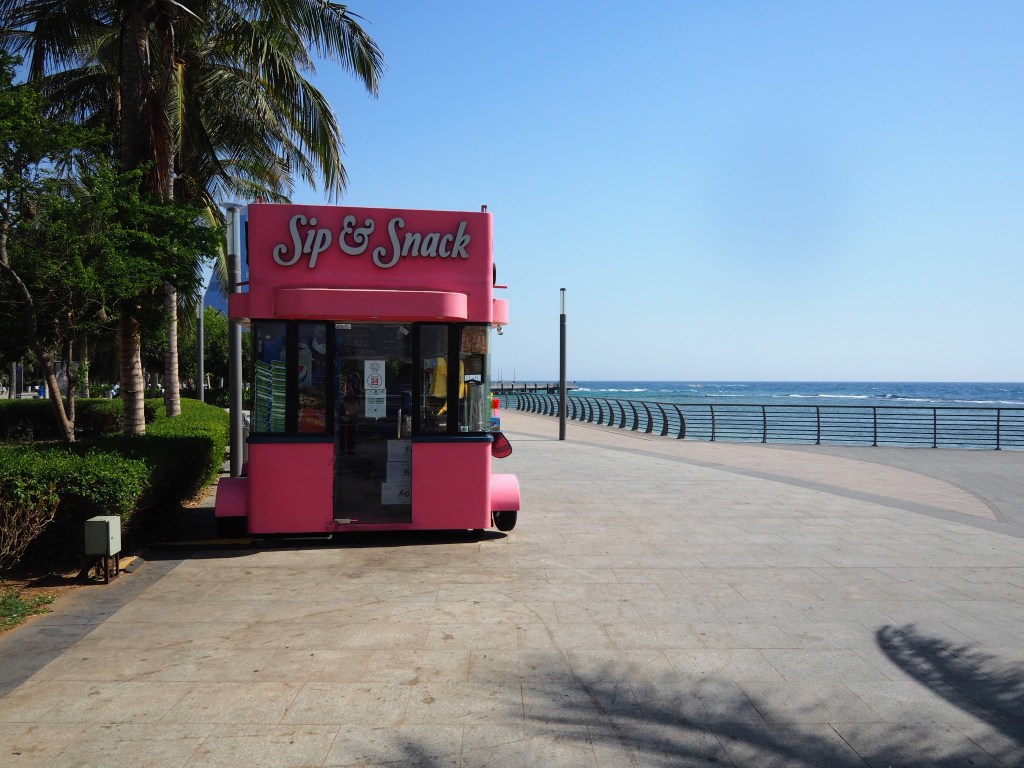
These small Sip & Snack stands offer candy, water, and other quick snacks.
Where are the people in my photos? Crowds in Jeddah, and in Saudi Arabia proper, tend to form after the maghrib prayer when the sun begins to set. This particular day was 100 degrees and sunny, and pictures were from around mid-afternoon, so most folks (and cats) were crowded under shady trees away from the sun. That being said, there were still quite a bit of people near to The Island Mosque and generally out along the waterfront taking pictures and sightseeing.
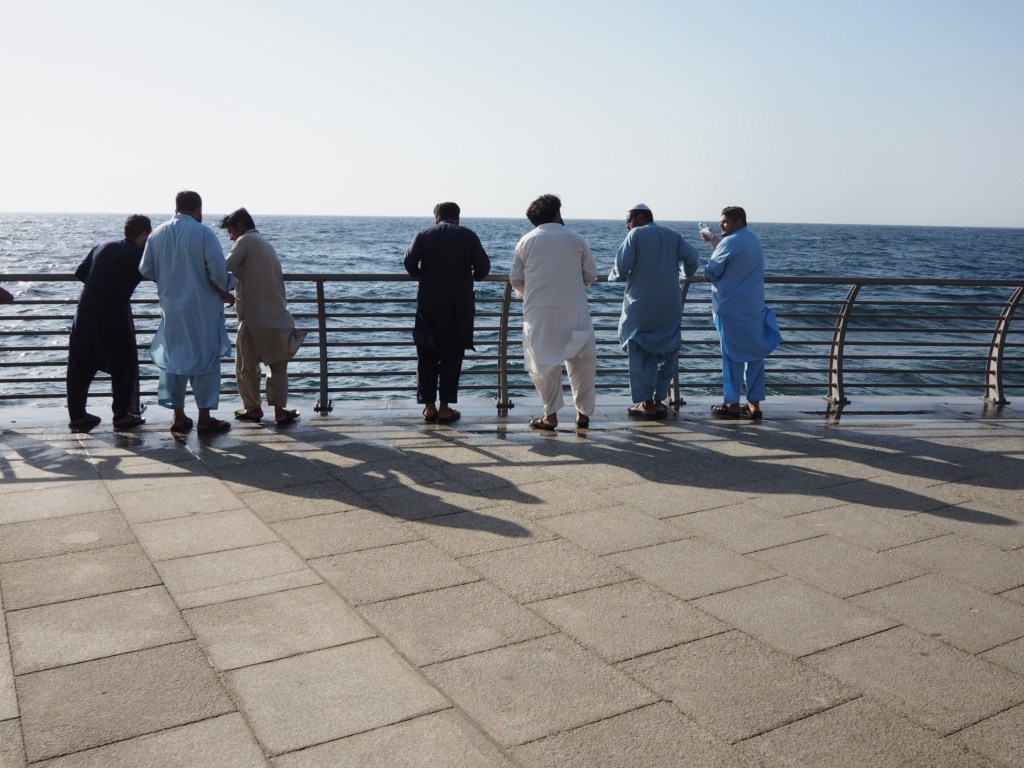
Dudes enjoying sea spray. 
Behind The Island Mosque are birds and sightseers looking towards Sudan in the West. The Jeddah Corniche remains one of my favorite places in the Jeddah/Makkah region. Despite the heat of the sun, it is usually breezy, there are amenities around if you become hungry or thirsty, and it is a melting pot of folks all enjoying the same coastal ambiance.

All the while you look at the Red Sea, large hotels and office buildings loom behind. This is the rather straightforwardly named Headquarters Business Park Tower, a 52-story tall office building and once tallest building in Jeddah. 
Flowers blooming in the sun. 
A statue of an Arabian Horse. I didn’t see a plaque to denote the history of this sculpture but there likely is one as was on other sculptures in the area. 
An art installation tucked in planted flora. 
The Red Sea butts up against rocks. In person, the water is very clear, and fish, crabs, and other sea animals can be seen. 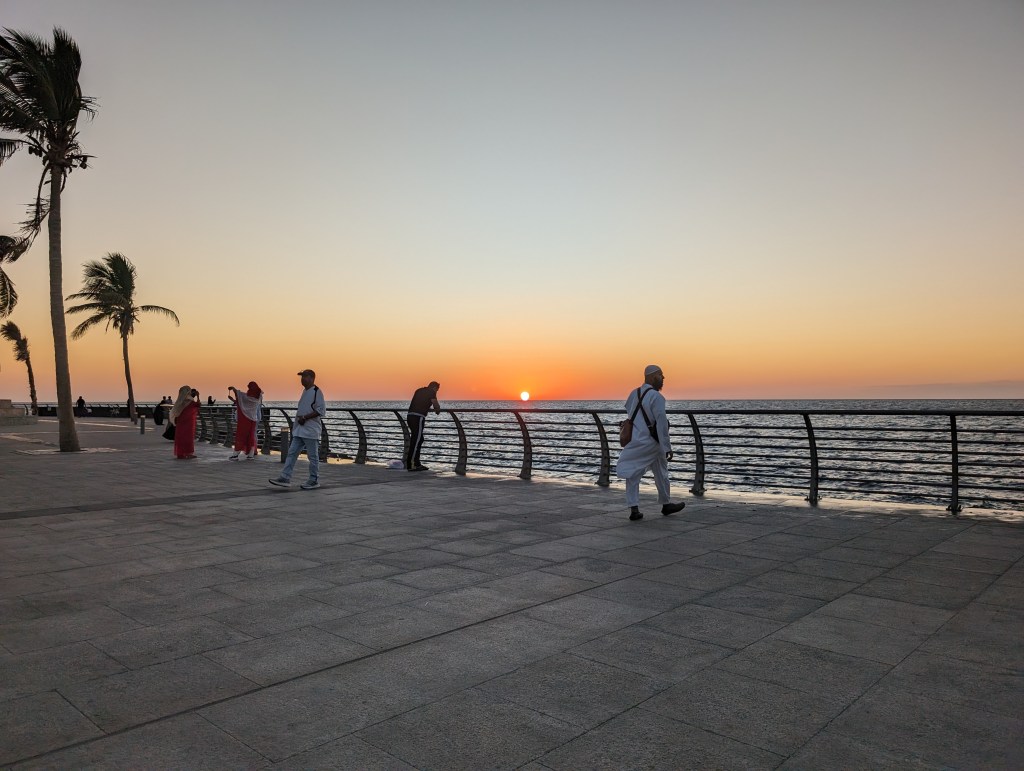
The Jeddah Corniche from sunset New Years Eve 2023. Taken with Google Pixel 8. All photos unless otherwise labeled were taken with my Olympus OM-D E-M10 and Lumix 14mm (28mm eq.) f2.5 on Friday April 19, 2024.
Cheers.
- A Briefing: Eid al-Fitr 2024
Preface: Regrettably, I went through most of Ramadan and to multiple Eid parties without taking many photographs. As I was writing this, I thought of all the things I should have captured but didn’t. I suppose a brief write up and less photos will suffice for my own memory’s sake.

Narrow streets in Makkah are decorated during Eid al-Fitr with lights strung from home to home. Taken with Google Pixel 8. The conclusion of Ramadan 2024 arrived on April 9 in Saudi Arabia, when astronomers noted the exact period a new moon is sighted (after all, Ramadan is generally marked as new moon to new moon, a period of 29 or 30 days). If it were to happen that thirty days passed since the last new moon and no new moon is able to be identified to mark the conclusion, the astronomers call it – Ramadan is over. I like to imagine the identification of the new moon by the astronomers like American Football referees hunched over a ball examining it if it crossed the goal line for a touchdown – if it has, then the celebrations commence.
To be frank, I’m not entirely sure if the new moon was spotted or if since 30 days had passed the refs just called it, but nonetheless Ramadan concluded and the Eid al-Fitr celebrations commenced.
The word Eid translates to holiday, and al-Fitr in the context of Eid means breaking the fast. Not to be confused with the Arabic word for mushroom (which is fitr), al-fitr in this context of Eid comes from the root fitrah, meaning original disposition, or innate nature – back to normal. One other point of confusion with the Eid holiday is that there are two of them: Eid al-Fitr and Eid al-Adha. The other Eid, Eid al-Adha, is celebrated at the conclusion of Hajj during a different time of the year.
This Eid, Eid al-Fitr, is celebrated as the day after the last day of Ramadan – so Ramadan ended April 9th, then Eid began on April 10th. While there’s no specific uniform celebration method for Eid that everyone follows, what seems most common to me is that in the morning of Eid at approximately 6:00, people will go pray in the mosque for a morning Eid prayer then head to a relative’s home, such as grandparents, for a bit of breakfast. After that, Eid celebrations take many shapes – some have multiple dinners over multiple days, others have one massive blowout. Either way, usually a dinner occurs quite late in the evening between 9:00pm and 11:00pm with men going off to their own section to banter with uncles, cousins, and grandpas, while women go off to their own section to banter with aunts, cousins, and grandmas. For some, it may be the only time during the year where everyone gets together.

Another street view. Taken with Google Pixel 8. What I’ve noticed is that the Saudi Arabian style of Eid al-Fitr dinner occurs in three courses: (1) appetizer of Arabian Coffee (coffee with cardamom) and dates, (2) main course of rice and lamb, and (3) a glass of sweet or unsweet green tea with mint leaf. Some families carry-out their dinners, or even meet up in a restaurant, while others prep the meals themselves. I read online that Eid al-Fitr celebrations vary from country to country, and culture to culture. So I can assume Eid al-Fitr in Marrakesh looks different to Eid in Makkah, and Eid in Makkah looks different from Eid in Kuala Lumpur. Even within Makkah, different cultures do Eid differently.
After a few nights of eating, chatting, and sharing in the jovial mood, Eid concludes, and folks go back to their normal diet and resume the normal pace of life.
Cheers.
- Rose Garden Park

A view across Rose Garden Park. Someday back in March when looking for a calm place to relax out of direct sunlight and outside of the usual coffee shop, we found a park via a quick Google Map search of “parks” in Makkah. We pinched and zoomed and located a promising one that looked to be in an area we were familiar with, despite never noticing it before when passing by. On the map, it was labeled “Rose Garden” with some reviews stating it was a nice park, so we decided to go.

The middle third of Rose Garden Park. A relatively calm area in a city that never sleeps. 
A prowling cat between the flowering bushes. The park is tucked in Az-Zahra District on Al Sarraa Street, and even though it is approximately a football field’s length away from the bustling Rusayfah Street (also known as Highway 80, a major a route passing through Makkah from Jeddah on the Red Sea to Dammam on the Persian Gulf), the park is a quiet, shady, green patch in the otherwise sunny, traffic filled city. Older three and four story homes surround the park secluding it, and small lanes branch off from the park deeper into the neighborhood.
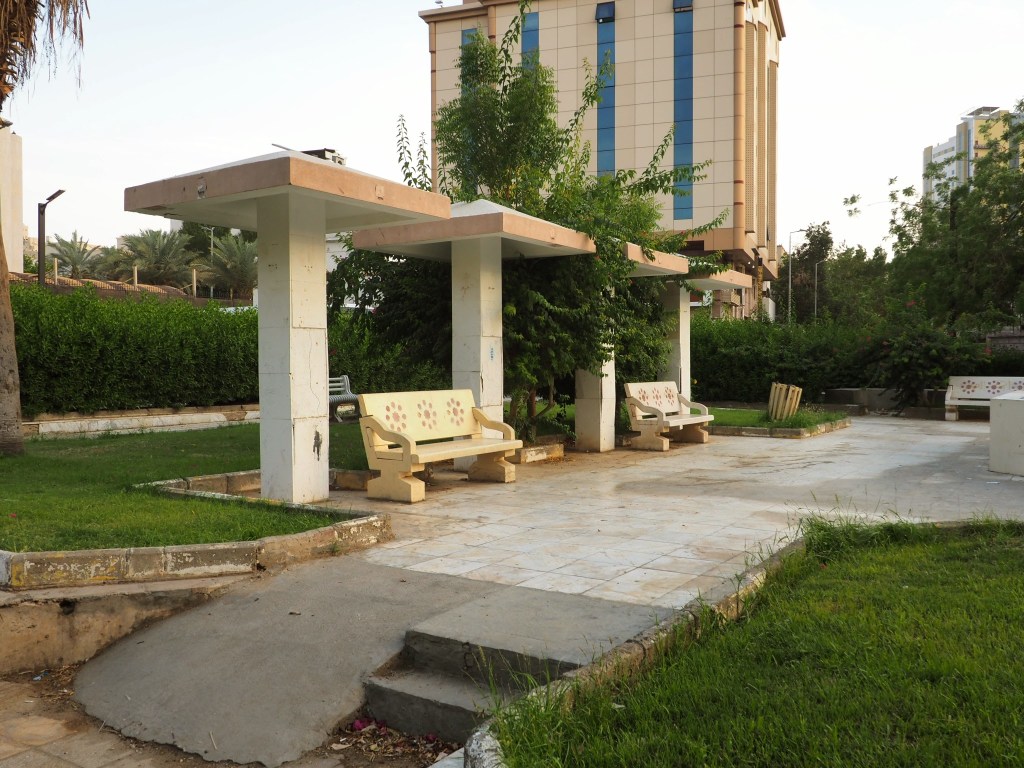
Some of the structures around the rose fountain are in need of a bit of upkeep. The park has three main parts: a southernly third with a dried fountain in the shape of a rose and stem where water once flowed over the pedals into a pool with roughly 6 surrounding benches, each with rose bushes (or what seem to be bushes with pinkish flowers on them) surrounding the benches; a middle third (our favorite section) made up of a maintained grass lawn with large date palm trees providing cover from the sun and home to song birds, roaming cats, pigeon flocks, and 8 surrounding benches; and a final third with a playground carpeted with artificial turf with swing sets and monkey bars, and a few benches for spectating parents.
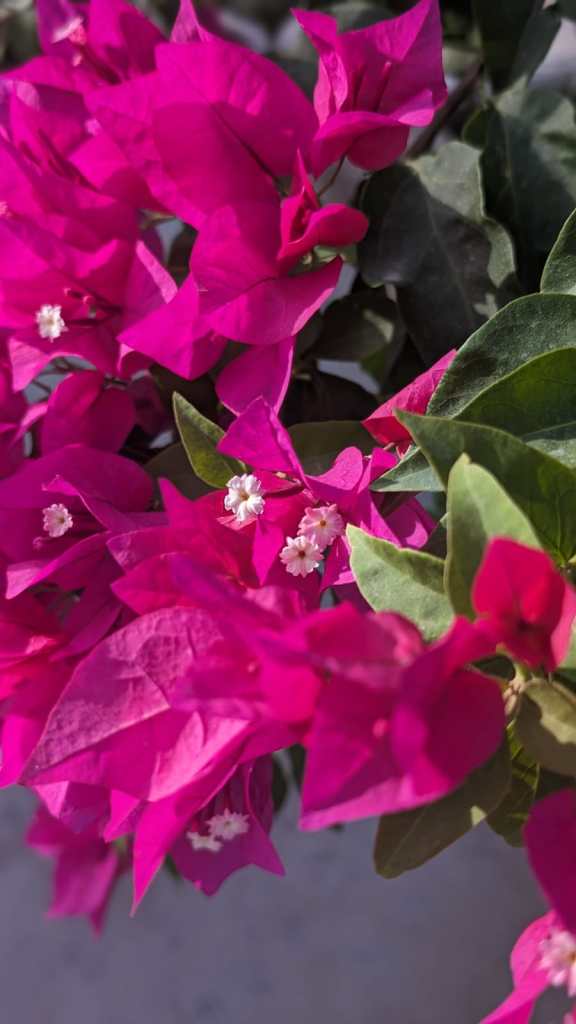
A close-up on the rose bushes. Quite lush plants. Photo taken with a Google Pixel 8. 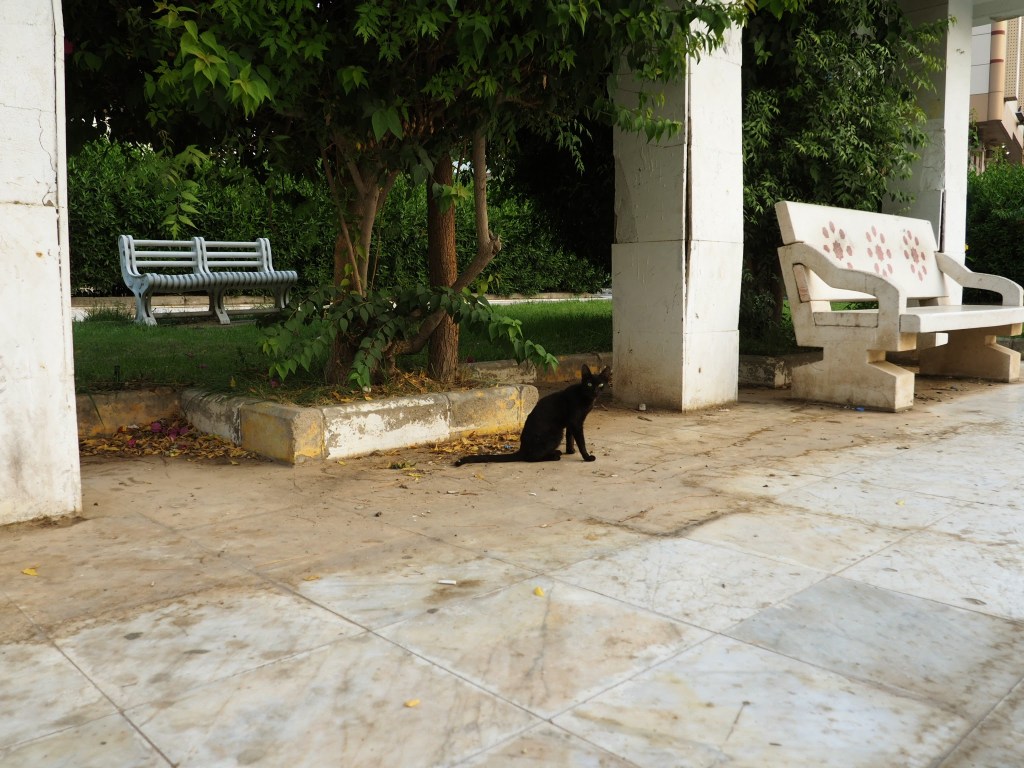
Makkah has many street cats. Many. We’ve found the best time to go to the park, especially during Ramadan, is from Asr to approximately a half hour before Maghrib. During this time, the sun is no longer as blistering and the winds tend to pickup to add additional cool air. And also during this time, the park is relatively empty, with a few people reading, cats loafing around for a late afternoon nap, and a few children kicking a soccer ball in makeshift goals on the playground.

A lounging cat. 
Some of the surrounding flora. 
A building (possibly out-of-use bathrooms?) separate the middle-third on the right and the children’s playground on the left. 
Bench with rose bush behind. Overall the Rose Garden is a great place to read, enjoy the shade, people and cat watch, and think. All photos unless otherwise labeled were taken with my Olympus OM-D E-M10 and kit M. Zuiko 14-42mm across multiple days during March and April 2024.
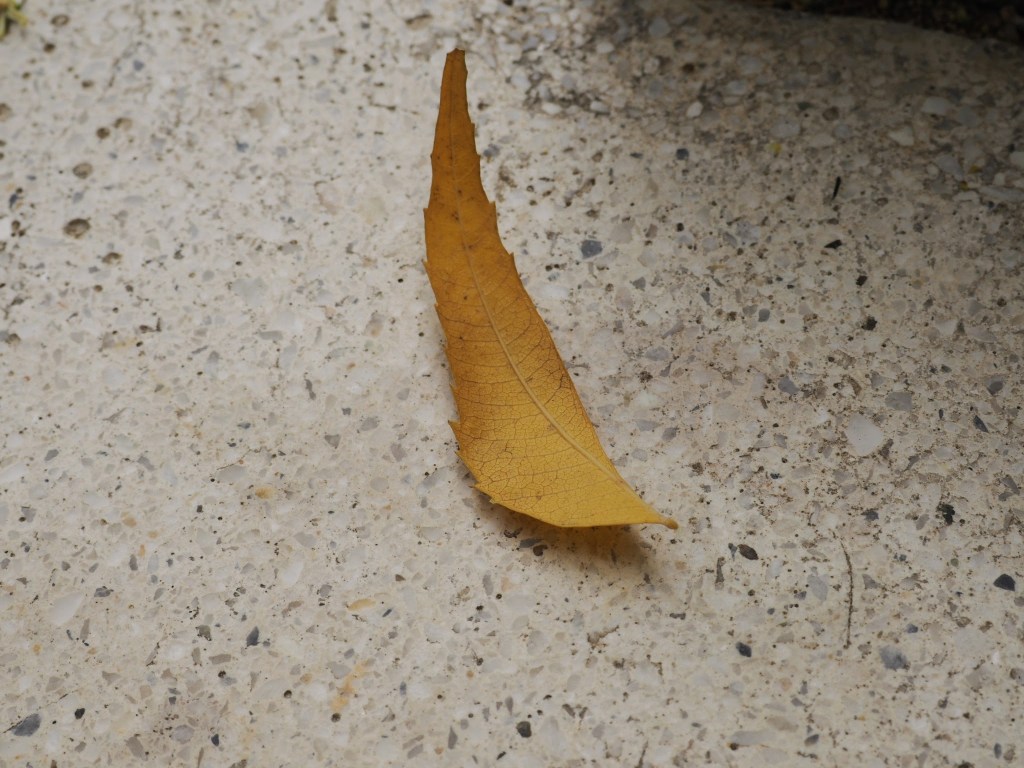
A leaf on the bench. 
The surrounding walkway. Cheers.
-
Subscribe
Subscribed
Already have a WordPress.com account? Log in now.
 L. Miller Minutes